Authentic Scaling: How Heritage Brands Protect Their Soul While Going Digital
Sai Digbijay Patnaik | Mar 24, 2026
Co-Founder
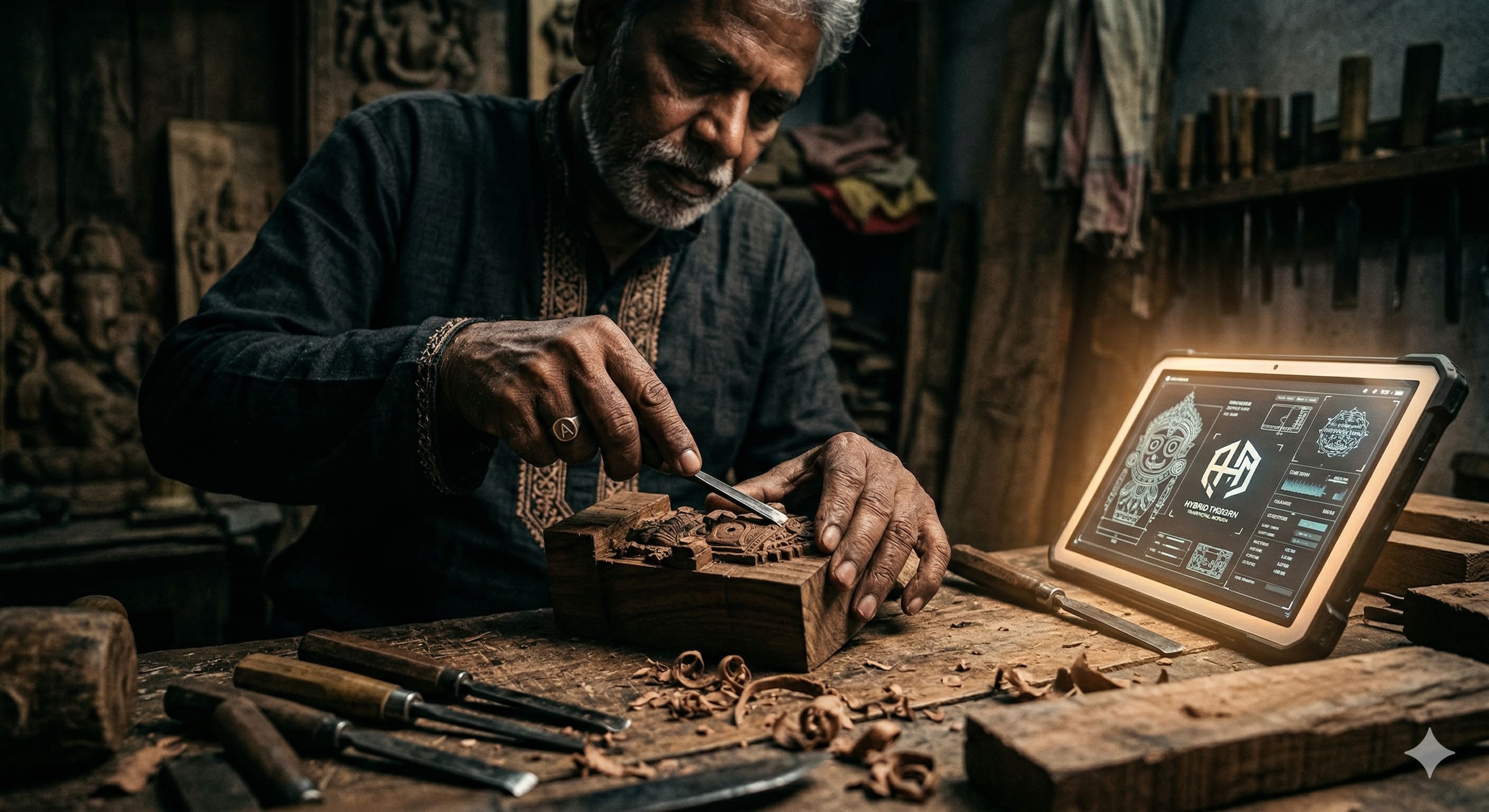
⚡ The Artisan Summary
- → The Core Problem: Heritage brands rushing into digital channels often strip away the very authenticity that made them valuable in the first place — trading earned trust for algorithmic reach.
- → The Strategy: Digital provenance — documenting, protecting, and communicating your brand's origin story across every digital touchpoint — is the framework that lets you scale without losing your soul.
- → The Impact: Brands that treat their history as a strategic asset, not just a marketing backdrop, build the kind of trust that new brands cannot buy and competitors cannot replicate.
There's a graveyard of heritage brands that tried to go digital and came back wrong.
Cracker Barrel spent months designing a cleaner, more "modern" logo for digital scalability — and reversed the decision within days after loyal customers called it soulless. Tropicana swapped its iconic orange-with-a-straw for a stripped-down redesign and watched sales fall 20% in two months. Gap's attempt at a Helvetica makeover was ridiculed off the internet in six days. These weren't cheap experiments. They were expensive lessons in what happens when a brand mistakes digital adaptation for digital reinvention.
The problem isn't going digital. Every heritage brand has to. The problem is going digital without a provenance strategy — without a clear, documented, consistently communicated record of what the brand actually is, where it came from, and what it's never willing to trade away for a cleaner interface.
What Digital Provenance Actually Means for Brands
In the art world, provenance is the verified chain of ownership and origin that establishes a work's authenticity. A painting without provenance is difficult to trust. A painting with a complete, documented history commands both confidence and premium value.
Heritage brands have provenance in the same sense. The founding story. The original craft. The generational knowledge baked into how the product is made or how the service is delivered. The community that grew around it. The problems it was built to solve, long before "brand positioning" was a phrase.
Digital provenance is simply the work of making all of that verifiable, accessible, and consistently present across every digital channel — your website, your content, your social presence, your metadata, and your marketing materials. Gartner named digital provenance among its top 10 strategic technology trends for 2026, noting that brands without a clear authenticity trail face mounting trust and credibility risks. For heritage brands, this isn't just a technical concern. It's an existential one.
The challenge is that most heritage brands going digital treat their story as a backdrop — something to put on the "About Us" page and reference in a brand video. That's not provenance. That's decoration. Provenance is operational. It's built into every piece of content you publish, every campaign you run, every channel you enter.
The Two Traps Heritage Brands Fall Into
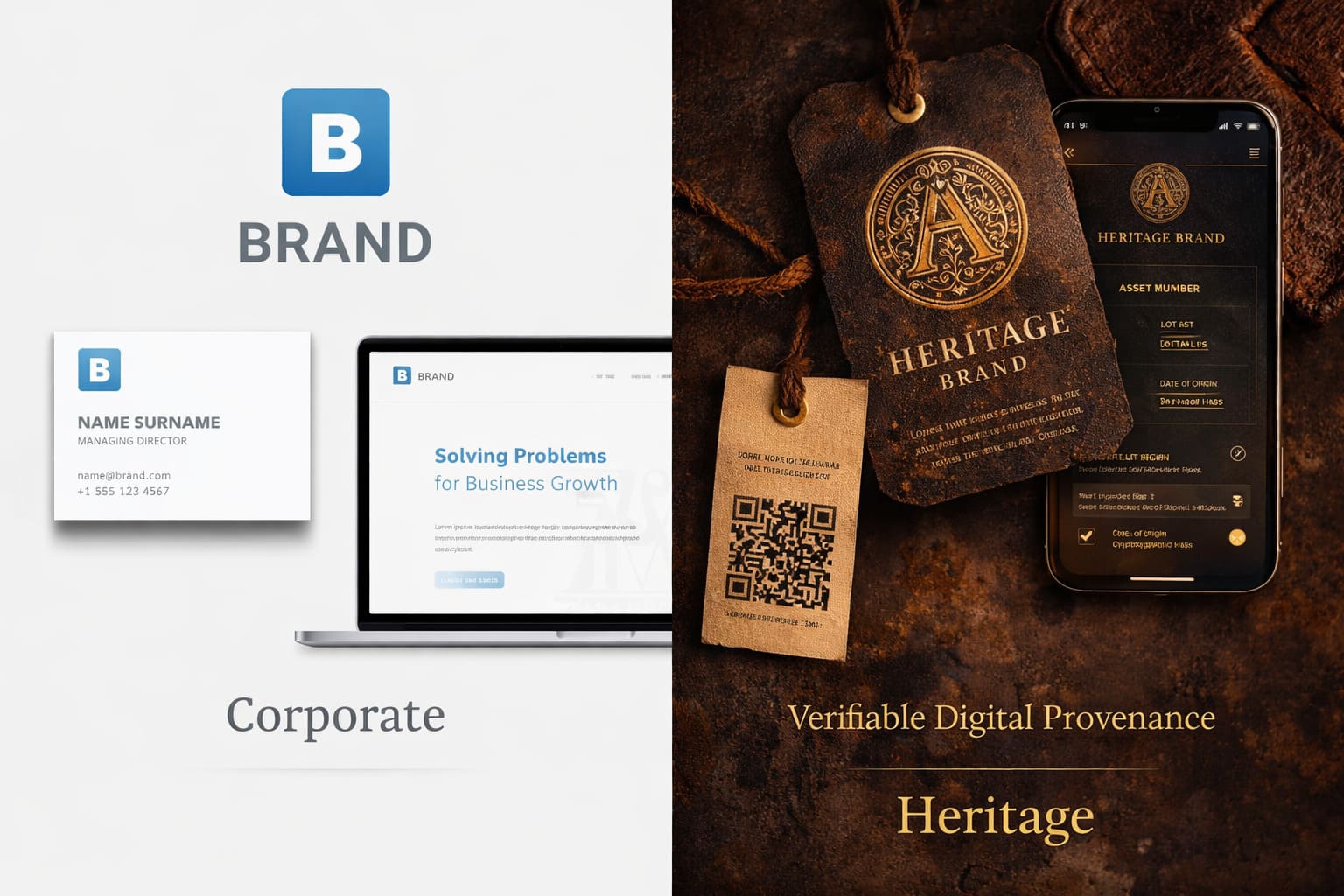
There are two equally dangerous failure modes when a heritage brand enters the digital space.
The first is overcorrection. In the effort to appear relevant to younger, digital-native audiences, the brand abandons its visual language, rewrites its tone, and starts chasing formats that have nothing to do with what built its reputation. The emotional equity — the thing competitors can't manufacture and customers can't replace — gets quietly discarded. What replaces it is usually a brand that looks like everyone else, communicates like everyone else, and gives customers no reason to feel anything beyond mild familiarity.
The second trap is paralysis. The brand recognizes the risk of overcorrection and does nothing. It preserves everything and updates nothing. The story stays the same, told in the same way, on channels that didn't exist when the original audience was built. The brand survives on loyalty while slowly losing relevance — not from a single bad decision, but from a hundred small decisions to not decide.
Authentic scaling is the path between these two traps. It's not preservation and it's not reinvention. It's translation — taking what the brand has always stood for and finding the digital language that carries it forward without distorting it.
Story Archaeology: The First Step Most Brands Skip
Before any digital strategy gets built, a heritage brand needs to do what we call story archaeology — a systematic excavation of what actually made the brand valuable in the first place.
Not the marketing version of the story. Not the polished paragraph on the website. The real thing: the founding decision, the craft philosophy, the specific problem the founder was trying to solve, the community that adopted it first and why. Old advertisements, product sketches, customer letters, workshop photos — these are strategic assets, not nostalgia. They are the documented evidence of authenticity that no new brand can produce.
This matters enormously for content strategy. Brands that build their digital presence on recovered, specific, real stories perform better than brands that build on aspirational positioning. A craftsman's original design rationale from 1974 is more compelling content than a brand manifesto written in 2026. Specificity is what makes content feel true — and true content is what builds the kind of trust that actually converts.
We explored the broader version of this in The Perfection Trap — the instinct to over-polish content before publishing it often strips away exactly the rawness that makes it credible. Heritage brands have an archive full of raw, real material. Using it is a strategy, not a compromise.
Authentic Scaling in Practice
Once the story archaeology is done, authentic scaling becomes a framework for every digital decision the brand makes. Think of it as three filters.
The first filter is identity continuity. Before any new digital channel, campaign, or content format is approved, ask a single question: does this feel like a continuation of the brand's story, or a departure from it? British Airways' "A British Original" campaign worked because it didn't abandon the brand's heritage — it reinterpreted it through individual passenger stories. The heritage became the emotional context, not the centerpiece. The brand bent without breaking.
The second filter is cultural translation. Going digital rarely means going to one audience. Most heritage brands scaling digitally are entering multiple markets, multiple demographics, or both. The story can't be transplanted wholesale. It has to be translated — not just linguistically, but culturally. What resonates about provenance in one market may land entirely differently in another. Cultural SEO is the technical expression of this: the practice of ensuring that a brand's authentic message finds the right cultural register in every market it enters, rather than defaulting to a global-neutral tone that means nothing to anyone.
The third filter is human-first execution. Heritage brand content has to sound like it came from people who genuinely understand the brand — not from a content machine producing volume. The human-in-the-loop approach is what keeps digital output connected to the brand's actual intelligence, rather than producing technically correct content that has no relationship to what the brand knows and stands for.

From Local Legacy to Global Presence
One aspect of authentic scaling that gets underestimated is the geographic dimension. Many of India's most valuable heritage brands — Kanjivaram silk weavers, Dhokra metal craftsmen, century-old masala houses, multi-generational Ayurvedic practitioners — sit on extraordinary provenance that global audiences are actively looking for. The craft, the origin, the tradition: these are not liabilities in a global market. They are the differentiator.
What has historically held these brands back isn't the story. It's the absence of a digital infrastructure to carry the story credibly to audiences who can't physically visit the source. As we laid out in The Global Village Paradox, the reach exists. The technology exists. What's needed is the strategic discipline to translate authentic local provenance into a digital presence that global audiences can trust — without sanding off everything that made it worth trusting in the first place.
This is where digital marketing in 2026 draws a clear line. The brands gaining ground aren't the loudest ones. They're the ones that have made a deliberate decision to be specific rather than broad, deep rather than prolific, and patient with their story rather than eager to optimize it into something more algorithm-friendly. The next generation of digital marketing rewards exactly this kind of disciplined authenticity — content that AI systems can cite with confidence because it says something real and verifiable, not just something searchable.
The Artisan Creatives Approach
Authentic Scaling is how we describe our work with heritage brands at Artisan Creatives. It starts with understanding the brand's provenance deeply enough to protect it — then building the digital strategy, content infrastructure, and channel presence that lets it grow without distortion.
From our studio in Odisha, we've worked on bridging traditional brand stories to digital performance across markets. We know what it costs when a brand loses the thread of its own story. And we know the difference between a content strategy that serves the algorithm and one that serves the brand.
If you're running a heritage brand and wondering how to enter — or re-enter — the digital space without becoming something unrecognizable, let's talk. The story you've built is worth protecting carefully.
Frequently Asked Questions
What is Authentic Scaling for heritage brands?
Authentic Scaling is the practice of taking a heritage brand digital without trading away the multi-generational craft and specificity that made it worth caring about. It means building a digital presence that carries the brand's real story forward, rather than papering over it with generic, algorithm-first copy.
What does Digital Provenance mean for a brand?
Digital Provenance is structuring a brand's content, schema, and authority signals so that its genuine history and origin are visible and verifiable online — and so that search engines and AI systems recognise the brand as the credible source for its own story. For a heritage brand, provenance is the asset; the work is making it legible to digital systems.
What is Story Archaeology?
Story Archaeology is the first step most brands skip: digging into a brand's actual history — the original design rationale, the people, the decisions — to surface the specific, true details that make it distinct. A craftsman's real reasoning from decades ago is more compelling content than any manifesto written for the website today.
Can a heritage brand go digital without losing its identity?
Yes — but only if the strategy starts from what makes the brand genuinely different and builds outward, instead of forcing it into a generic digital template. The two traps are going so corporate the soul disappears, or staying so analog the brand never reaches the audiences already looking for it. Authentic Scaling threads between them.