Next-Gen Digital Marketing: AI, Communities, and Emerging Trends
Sai Digbijay Patnaik | Dec 18, 2025
Co-Founder
⚡ The Artisan Summary
- → The Core Problem: AI made content production nearly free, so output is no longer a competitive advantage — and most "next-gen" advice still treats it like one.
- → The Strategy: Use the new tools to do fewer things more deliberately, with a human deciding what's worth making across SEO, social, paid, email, and reputation.
- → The Impact: Marketing that compounds because it carries a real point of view and is measured against revenue, not dashboard vanity metrics.
Most "next-gen marketing" advice is a list of tools with the word AI stapled to the front. Buy the stack, automate the funnel, watch the growth. The brands actually pulling ahead in 2026 are doing something less convenient: they are using the new tools to do fewer things, more deliberately, with a human deciding what good looks like. The technology changed fast. What works did not.
Here is the uncomfortable part. The same generative tools that let a lean startup produce a month of content in an afternoon also let every competitor do the same. When everyone has the production capacity, output stops being the advantage. Judgment becomes the advantage — knowing what to say, what to cut, and what not to publish at all. That is the entire premise behind our Human-in-the-Loop methodology, and it has only become more relevant as the tools got better.
When everyone can produce infinite content, the scarce resource isn't production. It's the judgment to decide what's worth producing.
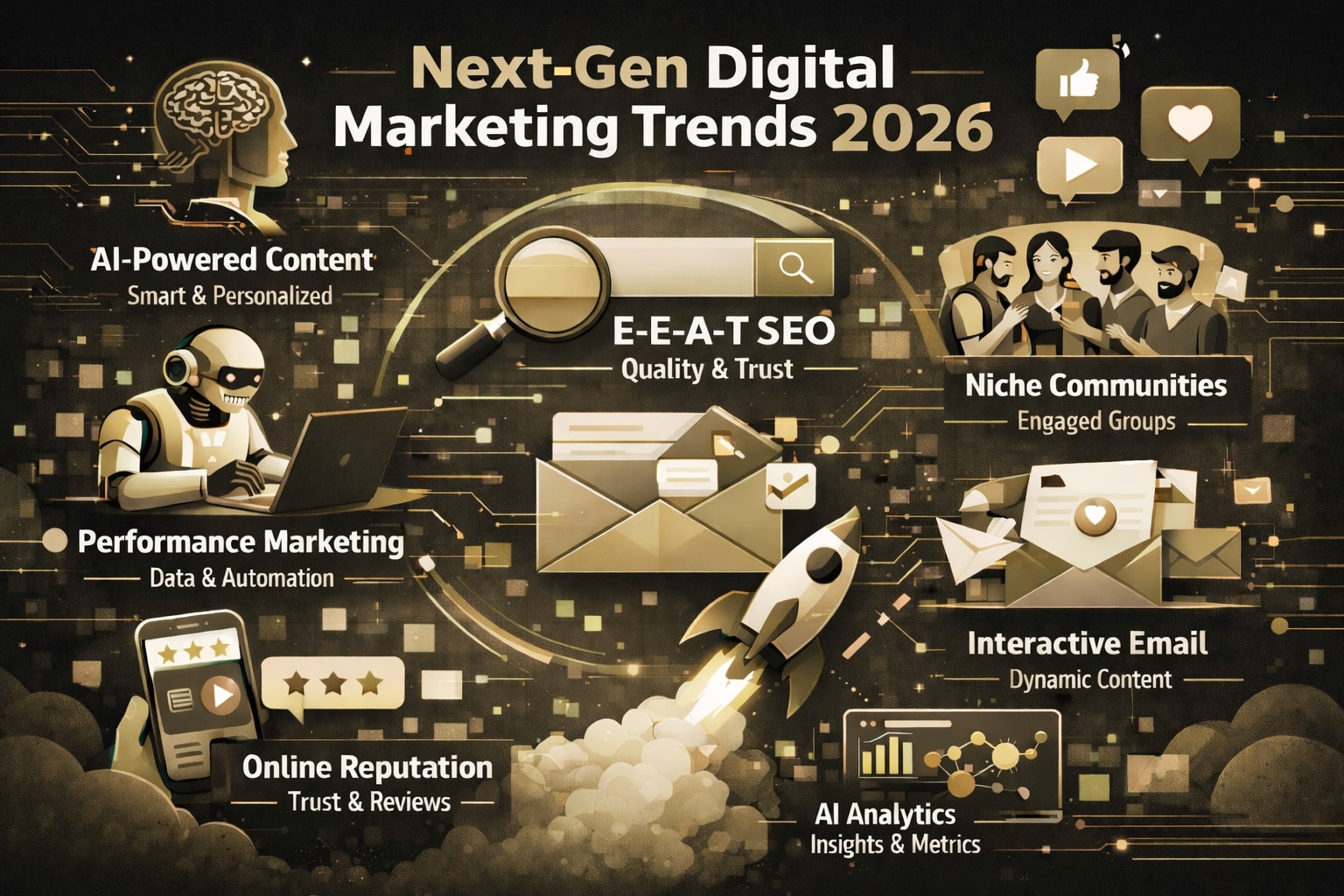
Social Media: The Shift From Reach to Rooms
The open feed is getting noisier and less trusted at the same time. The brands worth watching have quietly moved part of their effort into smaller, owned spaces — a Discord for a D2C community, a WhatsApp broadcast for a regional retailer, a tight LinkedIn following for a B2B founder. These are not bigger audiences. They are warmer ones. A Berhampur apparel brand with 2,000 engaged WhatsApp subscribers will out-convert the same brand with 50,000 passive Instagram followers, because the first group asked to be there.
The tooling matters here, but as a support, not a strategy. Social listening tells you what your audience actually argues about. AI can sort a thousand comments into themes in seconds. Neither one tells you what your brand should believe — and a brand without a point of view is invisible no matter how well it listens. We wrote about exactly this in why your brand has no voice online: the conviction problem comes before the distribution problem.
SEO: Optimising for the Answer, Not Just the Click
Search stopped being a list of blue links a while ago. A large share of queries now resolve inside an AI overview or an assistant's answer, and the user never reaches a website. If your strategy still treats a ranking position as the finish line, you are measuring something that increasingly doesn't happen. We unpacked the full picture in the zero-click search reality.
The work that holds up is the work Google's E-E-A-T framework has rewarded for years, now with higher stakes: a named author with real expertise, specific claims you can verify, content structured around the questions buyers actually ask. AI answer engines are selective about what they cite — generic aggregation gets summarised into nothing, while a clear, original argument gets quoted. Structuring content so a machine can extract a clean answer, while a human still wants to read it, is the discipline that separates content that compounds from content that disappears.
Performance Marketing: Accountable, Not Just Automated
Paid media automation has genuinely improved. Real-time bidding and dynamic creative let a small team run campaigns that needed a department five years ago. The trap is mistaking efficiency for strategy. A perfectly optimised campaign pointed at a weak offer just spends your budget faster. The expensive failures we see are rarely bad targeting — they are good targeting sending qualified traffic to a landing page that doesn't earn the click.
Two things separate paid spend that returns from paid spend that evaporates. First, first-party data: as third-party tracking keeps eroding, the brands with their own audiences — email lists, loyalty data, real customer behaviour — can target with a precision rented audiences can't match. Second, honest measurement tied to revenue, not dashboard vanity metrics. A campaign that reports a glorious click-through rate while producing zero qualified conversations is a campaign that is lying to you politely. Our approach to performance marketing starts from the offer and the funnel, not the ad platform.
Email: The Channel Everyone Underrates
Email keeps getting written off and keeps outperforming the channels that replaced it, for one reason: you own it. No algorithm sits between you and the inbox deciding whether your message gets seen. The newer capabilities — interactive AMP emails, AI-assisted subject lines, behaviour-triggered sequences — are useful, but they are amplifiers. A segmented, well-timed sequence to people who chose to hear from you will beat a clever one-off blast to a cold list every time.
The mistake is treating AI as the writer rather than the assistant. Let it draft subject-line options and tailor send times; have a person decide what the email actually says and whether it sounds like your brand or like every other brand running the same playbook. The difference is obvious to the reader, even when they can't name it.
Reputation: Speed Plus Honesty, Not Speed Alone
Reputation is no longer just a star rating on one platform. Buyers cross-reference — a Google review here, a Reddit thread there, an AI assistant summarising your brand from sources you didn't choose. Responding quickly to feedback genuinely moves the decision; people notice a brand that answers within hours rather than weeks. But speed without substance reads as a script, and audiences clock a canned reply instantly.
The brands that build real trust treat every review and mention as a chance to show they were actually listening, then keep their information consistent everywhere a buyer — or an AI — might check. Consistency and genuine response are what get a brand cited as credible, by both people and the answer engines now standing between your brand and its next customer.
What Actually Carries Into the Next Cycle
Strip away the tool names and the pattern is consistent. AI lowered the cost of producing marketing to almost nothing, which means production is no longer where brands win or lose. The advantage moved upstream — to the judgment about what to make, the point of view behind it, and the human willing to put their name on it. Pick the channels where your audience actually chose to be, say something only your brand could say, and measure against revenue instead of applause. That is the part of "next-gen" worth keeping. If you want a partner who treats strategy as the work and the tools as the means, tell us what you're building.
Frequently Asked Questions
Is AI replacing digital marketers in 2026?
No — it's changing what they're paid for. AI has made content production nearly free, so the value has shifted from producing marketing to deciding what's worth producing: the strategy, the point of view, and the editorial judgment a machine can't supply. The marketers losing work are the ones who only did production. The ones gaining are those who bring judgment the tools can't replicate.
What is the biggest digital marketing shift heading into 2026?
The collapse of production as a competitive advantage. When every brand can generate a month of content in an afternoon, output stops differentiating anyone. The scarce resource is now judgment — knowing what to say, what to cut, and what not to publish — paired with a clear brand point of view.
How should brands approach SEO now that AI answers many searches directly?
Optimise for the answer, not just the click. A large share of searches now resolve inside an AI overview, so ranking position alone measures something that increasingly doesn't happen. Focus on demonstrable expertise, named authorship, specific verifiable claims, and content structured around real buyer questions — the signals AI answer engines actually cite.
Which marketing channel is most underrated going into 2026?
Email — because you own it. No algorithm sits between you and the inbox. Newer capabilities like interactive AMP emails and behaviour-triggered sequences help, but they amplify a fundamentals-first approach: segmented, well-timed messages to people who chose to hear from you.